
I do not chase the candle; I study the gravity. In the current bull market, euphoria often masks technical rot, but even a meme coin’s collapse carries a systemic lesson. Shiba Inu (SHIB) presents a case study where the market’s attention is torn between a 280% surge in burn rate and a 72% annual price plunge, set against a backdrop of community rage and team incompetence. The narrative is bifurcated: on one hand, holders celebrate the “bullish” signal of reduced exchange balances and increased token destruction; on the other, the community is frothing with accusations of the project being a “dead coin” and a “scam.” As a macro watcher, I do not chase these candles; I study the underlying gravity that dictates whether SHIB’s recent 4% weekly bounce is a dead cat or a genuine reversal. The core question is not whether the burn rate is high, but whether trust can be burnt without a foundation.

### Context: The Meme Coin’s Broken Narrative Shiba Inu, an ERC-20 token launched in 2020, rode the 2021 meme coin mania to a peak market cap exceeding $40 billion. Its value proposition was never technological—it was a pure cultural and social signal, backed by a community-driven “Dogecoin killer” narrative and promises of an ecosystem: ShibaSwap DEX, the Shibarium Layer-2, and NFT collections like Shiboshis. However, by 2026, the team’s delivery has stalled. The L2, intended to reduce gas fees and enable DeFi utility, remains barely operational. The ecosystem is described by community members as “stagnant.” The current crisis erupted from a poorly conceived social media contest that tied a World Cup victory to a meme coin location, sparking accusations of the team “mocking investors.” The result is a liquidity mirror reflecting not a foundation of utility but a pool of fading conviction. Weekly price drop of 72% year-over-year, and exchange balances hitting five-year lows—these are the raw data. But as I often say, liquidity is a mirror, not a foundation. To understand the mirror, we must examine what it reflects.
### Core: The Trust Audit – Beyond Supply and Demand The Burn Rate Mirage The 280% increase in weekly burn rate is touted as bullish. Let’s apply first-principles engineering synthesis. SHIB’s total supply is approximately 589 trillion tokens. Even with a monthly burn rate of 1% (which is not sustained), it would take over eight years to burn 10% of the supply. The actual burn volume—about 200 million tokens per week—represents a microscopic 0.000034% of circulating supply. From a liquidity analysis perspective, burning does not create value; it merely reduces supply. In a vacuum of utility, reduced supply does not guarantee price appreciation unless demand remains constant or increases. The burn is a social signal, not an economic force. It reminds me of the 2017 ICO audit trap I witnessed: teams would announce massive token burns to hide underlying smart contract vulnerabilities. I reviewed 40+ whitepapers that year; the pattern is identical: when fundamentals fail, marketing burns. SHIB’s burn is a distraction from the fact that the ecosystem has zero cash flows. The ShibaSwap DEX has negligible total value locked (TVL) compared to peers. No protocol revenue exists. Holding SHIB provides no yield, no governance power, no access to services. The token is pure speculation.
Exchange Balance Illusion Exchange balances dropping to five-year lows are interpreted as “holders moving to cold storage,” reducing selling pressure. History does not repeat, but it rhymes in code. During the DeFi liquidity collapse of 2020, I analyzed MakerDAO’s CDP ratios and found that plummeting exchange balances often reflected exhausted retail investors moving worthless tokens to wallets they never open again. The SHIB case is similar: many holders are down 70-90% and have simply stopped trading. These are “dead addresses,” not committed stakers. True liquidity contraction is signaled by declining active addresses and transaction counts, which the community’s lament suggests are dropping. The low exchange balance may be a sign of capitulation, not conviction.
Team Governance: The Structural Decay The most alarming signal is the team’s behavior. They initiated a social media contest that angered the community, then remained silent. This is not just a misstep; it is a pattern of incompetence and negligence. In my experience auditing DAOs and governance structures, a team that cannot prioritize community sentiment over a cheap marketing stunt has no systemic risk management. The anonymous lead developer Ryoshi (possibly) abandoned the project. The current team lacks direction. The community’s fury—calling it a “scam” and “dead”—is not hyperbole but a reflection of trust evaporation. Code is law in DeFi, but here the law is broken by inaction. The smart contract ownership was renounced, meaning no upgrades are possible—a double-edged sword: it prevents malicious changes but also prevents any fixes or improvements. This project is a locked box with no key. The team is effectively a ghost.
### Contrarian: The Decoupling Thesis – Why the Bullish Signals Are Fragile Most analysts focus on the 280% burn hike and 5-year low exchange balance as standalone bullish catalysts. I argue the opposite: in a bull market where memes like PEPE and DOGE are commanding new highs, SHIB’s failure to rally despite these “signals” indicates a decoupling from market momentum. This is the hallmark of a dying asset: it does not respond to its own positive news. The reason is that the underlying meta is shifting: investors no longer believe in the “ecosystem narrative.” They see the betrayal. The algorithm does not care about your conviction. The only way SHIB can reverse this is through a concrete, verifiable engineering milestone—such as a functional Shibarium with real dApps, or a partnership that creates actual cash flow. Instead, the team is burning tokens, which is the equivalent of rearranging deck chairs on the Titanic.

Another contrarian angle: low exchange balances could be misinterpreted because of the sheer number of tiny wallets holding fractions of a token. SHIB’s price is so low ($0.000002 range) that many holders have a few cents worth. They are not worth selling due to gas fees. The true “liquid” supply is much larger than these numbers suggest. The market is mispricing the risk of illiquidity: if a large holder decides to sell, the order book is thin. The recent 4% bounce is likely a short squeeze, not organic demand. I do not chase the candle; I study the gravity.
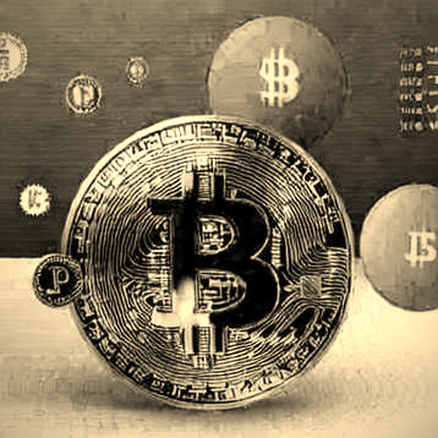
### Takeaway: Cycle Positioning – The Zombie Coin Probability Where does SHIB sit in the macro cycle? It is in the post-hype entropy phase. Without a radical intervention—a new vision, a competent team takeover, or an extraordinary catalyst—SHIB will decay into a zombie asset, traded but not built. The 72% annual drop is not a bottom; it is a process of value discovery with zero floor. From a portfolio management perspective, I have zero allocation to meme coins without cash flows. My fund focuses on infrastructure and AI-crypto convergence, where value accrues through computational utility. SHIB is a historical artifact, a reminder that ‘liquidity is a mirror, not a foundation.’ The mirror now reflects the community’s despair.
For traders: short-term bounces are possible but low probability. The real signal is the team’s next move. If they announce a tangible upgrade or a partnership with a real entity, the narrative could flip. But based on the pattern, I expect further silence. The certainty is that the ledger does not lie: the transaction counts, TVL, and developer activity are all declining. Certainty is the enemy of the ledger. Watch the chain, not the burn dashboard. The game has moved on.
Final question for the reader: If a token has no revenue, no utility, no development, and a hostile community, what is the likelihood that a 280% increase in weekly destruction of 0.000034% of supply will rescue it? History does not repeat, but it rhymes in code. The code here is: ‘abandonment.’